


The city or town hall is often the best-known building in any municipality. It is the face of the community, the hub of local governance, and the setting for many ceremonial activities, as well as the place to pay taxes, license the dog, or get a marriage license.
And yet it is sometimes the last municipal building taxpayers consider for improving, never mind a wholesale demolition and rebuild. It is rare that voters agree their city or town should spend tens of millions of dollars to build new space in which to conduct official business.
In Plymouth, the blue moon came in the form of public bathrooms.
That’s Town Manager Melissa Arrighi’s assessment of why her town is able to build a $40 million town hall when so many other communities are making do with less-than-perfect facilities. The added attraction of tourist-friendly restrooms — in a town about to celebrate its 400th anniversary in 2020 in grand style — tipped the balance in support of the project, she said.
In Foxborough, it took almost 15 years of debate and redesign before the town agreed to build a new town hall and knock down the leaky old one, which has lead contamination from an old police shooting range in the basement and a first floor that frequently floods. Construction on the $7.4 million project started in April and is expected to be done by the fall of 2017.
In a far more common scenario, though, towns such as Cohasset and Norwell are still trying to figure out what to do about their deteriorating municipal buildings. They are weighing the considerable cost of improvements against the virtues of convenience, comfort, and accessibility, and historic preservation.
“Town halls are always on the bottom of the to-do list,’’ said Geoffrey Beckwith, executive director of the Massachusetts Municipal Association, adding that police and fire stations, libraries, senior centers, and recreation facilities get more attention.
While Beckwith said his agency doesn’t track how many communities need new municipal offices, his impression was that deferred maintenance has created big problems for many town and city halls.
“There’s a real need out there,’’ he said. “The communities that have been able to do it are really among the fortunate few.’’
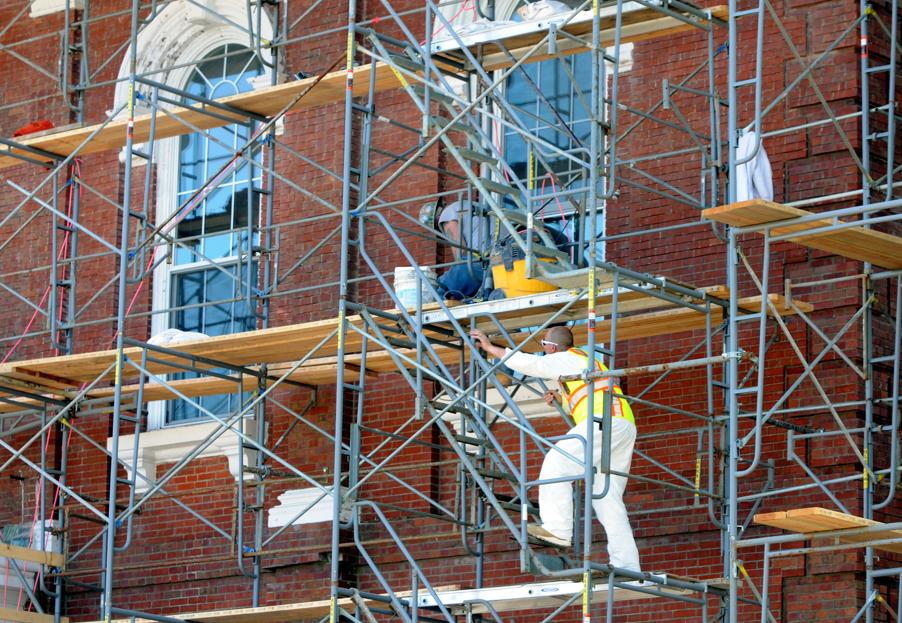
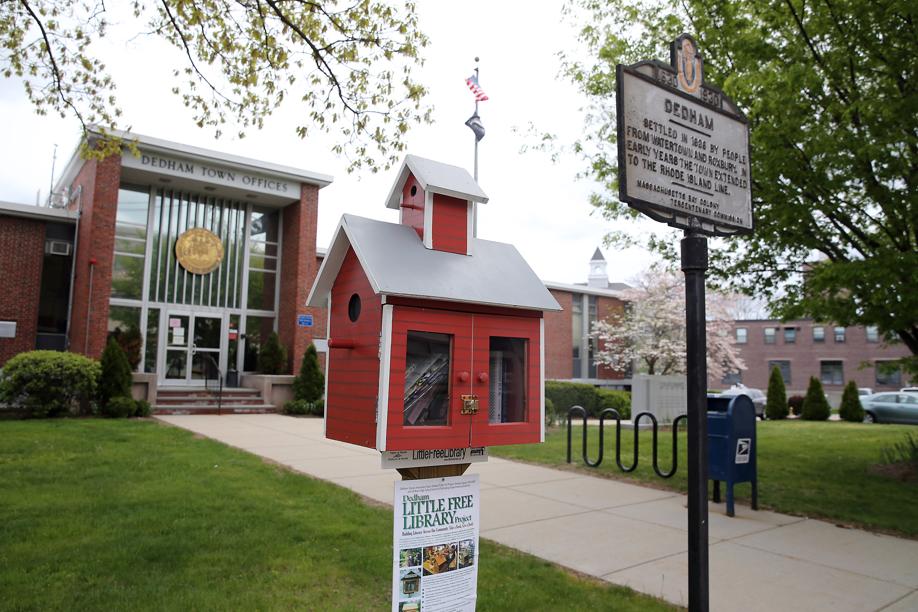
Count Dedham among the few. That town is renovating the historic Ames Schoolhouse — built in 1897 — for town offices and a senior center, at a cost of $17.5 million, with the money coming from local meals and hotel taxes.
The nearby site of the existing 1960s-era Dedham Town Hall will be used by the police and fire departments. The public safety needs drove the project, according to Town Manager James Kern.
“Town Hall is being relocated so we can accommodate the more pressing needs’’ of the fire and police departments, Kern said. “It’s not as if people in Dedham said we need a new town hall. We really didn’t, but sometimes you need to do one thing before you can do the next.’’
The town of Hanover realized it had to act quickly to repair its town hall when the cupola on top of the historic building started swaying precari-ously two years ago, according to Assistant Town Manager Anthony Marino.
“The cupola almost fell off; that’s what kick-started this project,’’ he said.
The town used a crane to lift the cupola onto the lawn of the town library and is using Community Preservation Act money from the state for a $1.085 million restoration of the central 1863 section of the building. It is looking at other ways to pay for air conditioning for the building, an approximate $250,000 cost that officials decided wasn’t an appropriate use of preservation funds, Marino said.
Plymouth also is using community preservation money to pay for a portion of its town hall project: the restoration of the long-vacant 1820 Courthouse in the center of town. Proceeds from the local meals tax will finance a 60,000-square-foot addition to the courthouse, and the school district’s administration will take over the current town offices, Arrighi said.
She said selling the project to the public involved hundreds of coffees and teas in homes and public presentations.
“We have 104 square miles, 400 miles of road, so we covered some territory,’’ she said. “It was a ton of work with a ton of outreach. We had a meeting one night with nine committees all sitting around a table. We knew if we didn’t have a buy-in from all of them, we would have to find something else to do.’’
Public support grew, she said, in part because of the public bathrooms in the plan but also because “they were really sick of the blight in the downtown and really sickened by the condition of the 1820 Courthouse. It had been empty for so long, and it was such a shame.’’
In Norwell, the town is in the final stage of an audit of all town buildings, including the town hall, according to Town Administrator Peter Morin.
The building had been an elementary school that “basically went to being a town hall over a weekend,’’ he said, adding that the building’s top floor isn’t used because of poor air quality and lack of an elevator. The facility also needs new heating and air-conditioning systems, updated wiring, and about $800,000 worth of new windows, he said.
“The current plan is to approach it incrementally,’’ Morin said, adding that Norwell’s library also needs work, as do the highway barn and schools.
But while towns can get state money for school repairs and construction through the Massachusetts School Building Authority, there is “no equivalent for municipal buildings,’’ Morin said.
“Towns are left on their own on this, and we’re not expecting any help any time soon,’’ he said. “So we have to be creative.’’
To that end, Norwell is looking into using “Green Community’’ grant money from the state to make its town hall more energy-efficient. And the state is providing a consultant through the governor’s Community Compact program to help develop a comprehensive capital improvement plan, including ideas for how to finance the construction, Morin said.
Cohasset is working with the Metropolitan Area Planning Council on a similar plan, which will include recommendations on what to do with its charming but outmoded town hall.
Built in 1857 for town offices and meetings — with an auditorium where Humphrey Bogart once performed in the 1930s — the building faces Cohasset Common. Additions were made with little consideration of maintaining easy access to all parts of the building.
“It’s a goofy building,’’ said Board of Selectmen Chairman Steve Gaumer.
And for at least a decade, the town has been devising and revising plans for its future.
“It’s a live issue in Cohasset and in a number of other communities,’’ said Mark Fine, director of municipal collaboration for the planning council. “It isn’t clear to me why some towns can make those investments and other towns haven’t.’’
Not all communities need to invest in their town halls, and Easton is one example.
The Easton Town Hall is in the 1912 former Wayside Estate, a beautiful mansion donated to the town by the Ames family in 1960, Town Administrator David Colton said.
“It’s challenging because it’s an old house,’’ he said. “My office is in the kitchen and the selectmen meet in the dining room. It’s actually very quaint, and it works.’’
In the works
Several south communities are looking to renovate or replace their town halls.
Cohasset: Working with the Metropolitan Area Planning Council on what to do with its charming but outmoded town hall.
Dedham: Has $17.5 million to renovate a historic school into town offices and senior center. Estimated completion date: April 2017.
Foxborough: Has $7.4 million to build a town hall in the parking lot of the existing building, which will be razed. Estimated completion date: fall 2017.
Hanover: Has $1.08 million to restore the existing town hall. Estimated completion date: summer 2017.
Norwell: No plan in place. The existing town hall needs new heating and air-conditioning systems, updated wiring, and about $800,000 worth of new windows.
Plymouth: Has $40 million to renovate and add to a historic courthouse for town offices. Estimated completion date: late summer 2017.
Sources: Towns
Johanna Seltz can be reached at seltzjohanna@gmail.com.
 PREVIOUS ARTICLE