


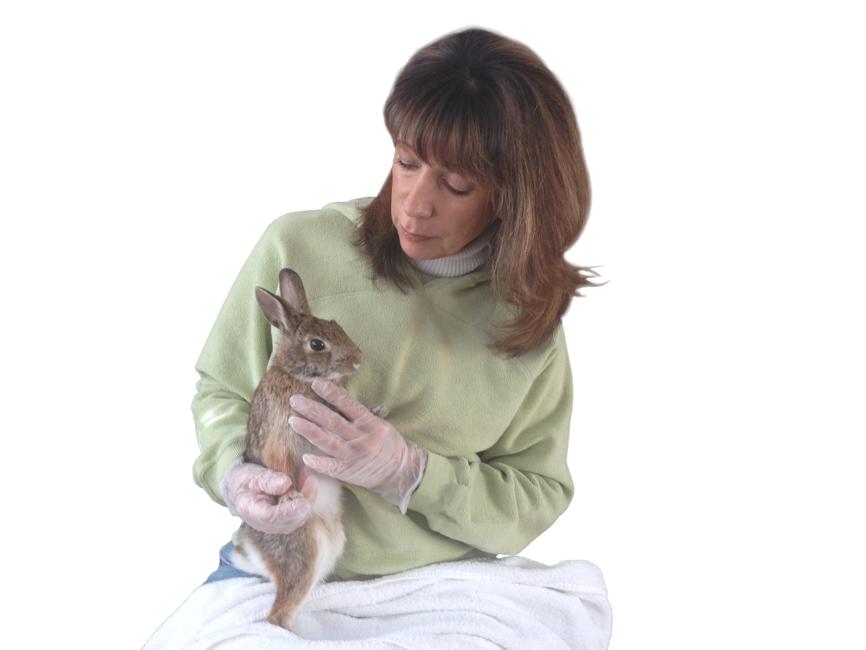
In the mid-1990s, JoAnn Sequeira was supervising recess for her first grade class in Cambridge when the students discovered an emaciated baby squirrel at the base of a tree. The Arlington resident took the animal home and nursed it back to health with the aid of library books.
“I didn’t know who to go to for help,’’ Sequeira recalled. “In my heart, I knew it was something I wanted to do.’’
Sequeira, who now works part time as a K-6 reading specialist, earned her wildlife rehabilitation permit from the Massachusetts Division of Fisheries & Wildlife in 2005. She is one of six volunteer, home-based members of the nonprofit North East Wildlife Animal Rehabilitation Coalition who care for injured and orphaned wildlife found and referred by local residents, veterinarians, animal control officers, wildlife centers, and animal rescue agencies.
Her team members, all of whom are trained in capturing, rescuing, handling, and assessing the animals’ needs, are Sue Benoit of Arlington, Deanna Gualtieri of Billerica, Mary Petrino of Chelmsford, and Lisa Cournoyer and Laurie Schultz of Wilmington.
Each has developed a specialization allowing for more efficient care, with species including raccoons, cottontails, skunks, possums, chipmunks, fox, coyote, mice, groundhogs, bats, and gray, red, and flying squirrels.
Reptiles, raptors, and birds are referred to other groups.
The goal of the coalition, which is part of the Wildlife Rehabilitators Association of Massachusetts, is to return the animals to their natural habitats. But while she says public perception of wildlife rehabilitators largely involves cuddling with babies, the job is far more demanding.
In addition to feedings as frequent as every two hours, daily tasks include responding to phone inquiries, preparing special diets, administering medical treatments, cleaning and building cages, identifying appropriate release sites, and educating the public to prevent the mistaken removal of a baby from its mother’s care.
The job is also costly, Sequeira said, with last year’s out-of-pocket expenses exceeding donations by nearly $2,000. In 2015, the coalition rehabilitated nearly 600 animals.
“You have to be totally committed,’’ said Sequeira, “but there’s no greater joy than giving nature back one of her own.’’
For more information, visit new-arc.org.
Cindy Cantrell
Cindy Cantrell can be reached at cindycantrell20@gmail.com.
 PREVIOUS ARTICLE