


One in an occasional series marking the National Park Service’s 100th anniversary.
ESSEX, Mont. — The drive along the southern border of Glacier National Park in northwest Montana on US Route 2 serves up some of the most majestic scenery in the nation. Few other stretches on this 2,751 mile byway can rival this region’s magnificent and rugged mountain vistas.
This is the same US Route 2 that cuts across northern New Hampshire and Maine and should not be confused with state highway Route 2 in northern Massachusetts. In between the villages of East and West Glacier — the two main entrances to the park — lies one of the more interesting and unique hotels in the region.
The Izaak Walton Inn sits in the unincorporated township of Essex, 26 miles from West Glacier and 30 from East Glacier. The inn is a great jumping off spot for park visits, but the overriding theme is the railroad, which ignited the development of the Northwest 125 years ago.
Built in 1939 on land owned by the Great Northern Railway (now Burlington Northern Santa Fe or BNSF), the inn was originally supposed to serve as a southern entrance to the park, but World War II intervened and those plans were never realized, according to innkeeper Brian Kelly.
Kelly, 49, and his wife, Mary, a Somerville native, bought the Izaak Walton in 2006 after he retired from the Chicago Fire Deptment as a blacksmith. Yes, that’s right, a blacksmith, meaning he fixed anything to do with metal.
The rustic and piney inn possesses a decidedly 1950s feel and is decorated with old railroad photos and memorabilia. A lovely sitting room off the reception area greets visitors when they enter the main building, which has 33 rooms. It’s a good thing the inn has a full bar and restaurant because there is nary a store or restaurant for 20 miles. From all appearances, the inn, adjacent small rail yard, post office, a handful of second homes, a ranger station, and lots of pine trees make up Essex.
A line on the inn’s website testifies to its remoteness: “In keeping with the era in which the lodge was built: TVs, telephones, elevators, air conditioning, and in-room coffee makers in the lodge are not available. No cell service is available within a 30 mile radius.’’
There are pay phones and a small Wi-fi area in the hotel, but what’s the point? You’re there to unplug from the everyday world.
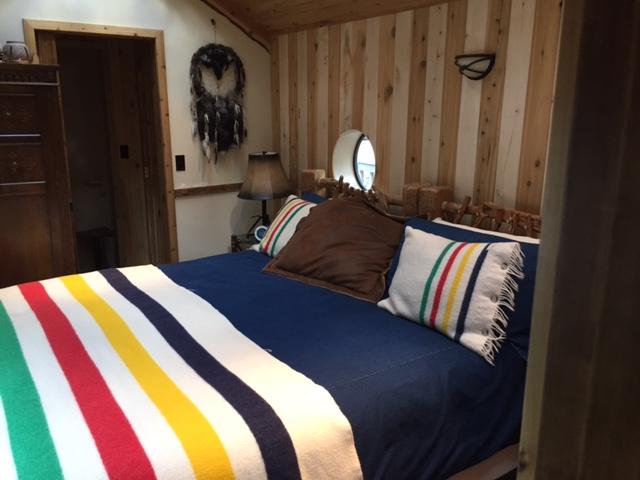
Last fall, my wife and I stayed in a small and slightly dark room. The bathroom built into the room was seemingly an afterthought, but a private bath would have been a luxury for the railroad workers who stayed there from 1939-’51, when there was one bathroom on each floor, according to Kelly.
Guests can also stay in one of eight converted cabooses or a locomotive turned into a luxury suite. Fear not, train enthusiasts, the cab controls were left in place for those wishing to fantasize.
If you want a good night’s slumber and aren’t a sound sleeper, go to a Residence Inn. If you like listening to trains passing hourly, stay at the Izaak Walton. Westbound trains ease you into semi-consciousness as they drift down the grade from East Glacier and Marias Pass.
First comes the rumble of the locomotive, then, an intermittent whoosh as each rail car glides by 70 yards from your window. Then it’s sleepy time again until the next train passes. The line hosts 40-50 trains a day, including Amtrak’s Chicago-Seattle Empire Builder passenger train, which visits twice a day and will stop at the Izaak Walton upon request.
“You can take the train all the way from Union Station in Chicago right to the hotel,’’ boasts Kelly, a train fan himself who grew up near tracks in Chicago.
This is paradise for train watchers. The rail line forms the southern boundary of Glacier National Park and was built after Maine native and self-taught engineer John Frank Stevens — also known for his work on the Panama Canal and Trans-Siberian railroad — located Marias Pass, the low elevation point that made a railroad feasible in the region. He nearly froze to death for his trouble because he found the pass in a blinding snowstorm in December of 1889.
Rocking away on the porch and watching trains appeals to only about a quarter of the inn’s guests, so there’s plenty of other activities, says Kelly. Crosscountry skiing, backcountry and wildlife tours (elk, moose, grizzlies, and mountain goats), hiking, mountain biking, and fishing are other popular pastimes. Kelly says the inn is the only Glacier business open year round besides the park itself.
“The (nearby) middle fork of the Flathead River has some the best fly fishing in the country. I’m not a good fisherman and even I catch fish,’’ he says.
If the measure of the inn is how much you talk about the experience when you get home, the Izaak Walton scores a 10. Visit www.izaakwaltoninn.com.
John Dodge is a freelance journalist in West Newbury and can be reached at jdodge349@gmail.com.
 PREVIOUS ARTICLE