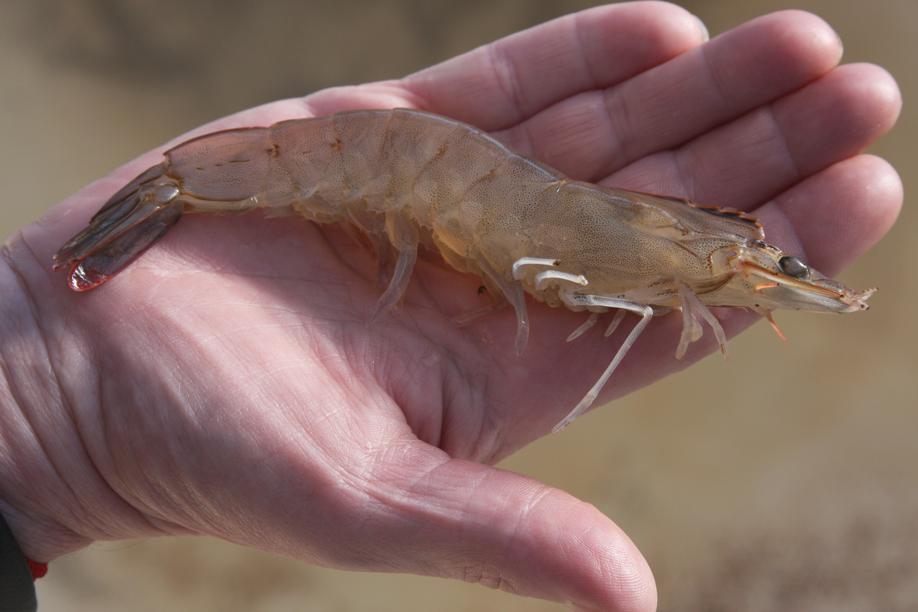


University of New Hampshire researchers say they’re developing a way that people can raise shrimp at home, whether for educational purposes or as a small business.
Researcher Michael Chambers said the shrimp can be cultivated in any larger container or tank, or even a backyard kiddie pool, at a relatively low cost.
“It’s just kind of fun to raise things sometimes on a farm,’’ Chambers said. “This is a unique product and they grow quite quickly.’’
Chambers, an aquaculture specialist at the UNH’s Cooperative Extension and N.H. Sea Grant, said the goal of the program is to bring fresh, local shrimp to New England, after the collapse of the winter season shrimp industry in the Gulf of Maine in 2013.
Regulators voted in November to keep it closed through 2021 because of concerns about the impact of rising water temperatures on the shrimp population.
Raising the shrimp could be a way for New England fishermen or farmers to earn money during the winter, Chambers suggested. His team is also looking into creating an educational kit for high schoolers and college students, as well as a kit for people who simply want to grow their own shrimp at home.
Chambers said people could make $40,000 or more a year if they invested in a large-scale operation. The home-grown shrimp could replace frozen or processed shrimp found in supermarkets during the winter, he said.
Land-based shrimp farming has been adopted by well over 200 people in the Midwest, said Chambers, who said he has been working for the last three years to see if it could take off here.
How does it work?
The shrimp are grown in a “biofloc’’ solution, a mixture that looks like chocolate milk. It contains bacteria, algae, and other living organisms, Chambers said.
Not only does the biofloc provide the shrimp a source of food, but it is capable of “cleaning’’ the shrimp’s waste and turning it back into food. The shrimp can go for days without needing anything else, he added.
The farmer buys tiny shrimp in bulk and puts them in temperature-controlled containers with biofloc. The biofloc is checked every day.
After the first four weeks, the shrimp only grow to weigh around 1 gram. After that, they grow around 1 to 2 grams per week. With the help of supplements, the shrimp are generally fully grown, weighing in at around 20 grams, after four months. Bigger shrimp can take longer.
After one batch of shrimp is done, the warm, soupy biofloc can then be reused for other batches of shrimp.
“The older it is, the more worthwhile it is, and it becomes richer in bacteria,’’ Chambers said.
He and his team recently harvested one batch of shrimp at UNH’s Jackson Estuarine Lab. And they cooked them up.
He described the flavor as sweeter than other shrimp commercially available now. He also said it tasted better, because they pulled them fresh from the tank and cooked them, rather than eating frozen shellfish from the freezer.
“Oh, my gosh, it’s a treat,’’ Chambers said. “It’s a unique flavor.’’