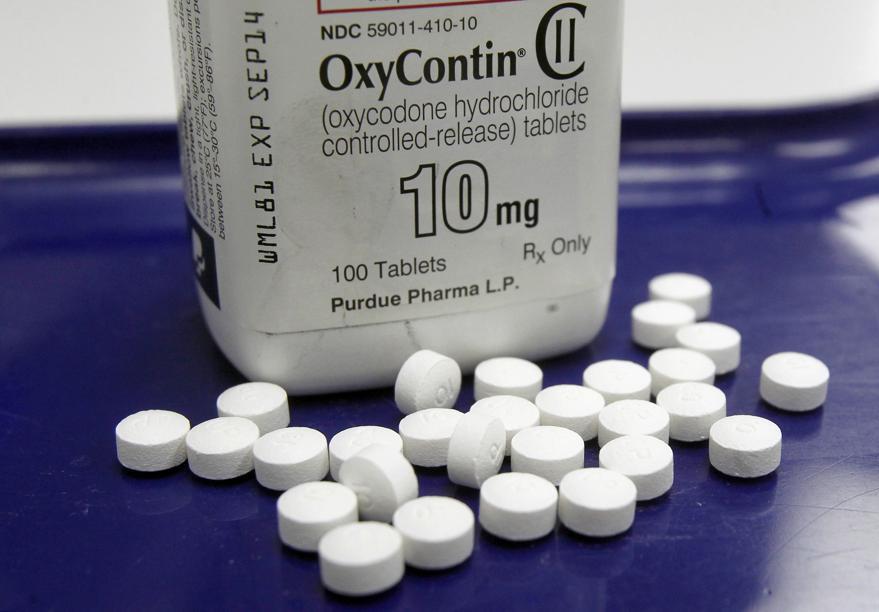


Although the opioid crisis in the United States continues to make headlines, a new analysis finds that prescription opioid use has dropped by 60 percent since 2011 — when prescribing was highest — and by the end of this year, usage is expected to drop to levels not seen in nearly two decades.
On a per capita basis, there were 29 opioid pills used per person in the US last year, a 29 percent drop from 2011, even though the US population has grown 5.4 percent since then. And this year, there is a 17 percent forecasted drop in the number of morphine milligram equivalents, or MME — a measure used to describe potency of the painkillers — from 2019.
Notably, the biggest drop was seen in prescriptions written for 90 MME or more per day – which carry the highest risk of overdose and addiction — with a 70 percent decline since 2011. The proportion of these high potency prescriptions also fell from 52 percent in 2011 to 32 percent in 2019, according to data from the IQVIA Institute for Human Data Science, which is part of the IQVIA market research firm.
The analysis also found that, from 2018 to 2019, the average MME per million people in the US fell to 366 from 433, a 15 percent drop. Moreover, each state saw a decline in MME per capita, ranging from 10 percent to 29 percent, indicating all states made progress stemming prescription opioid dispensing. In both years, Tennessee had the highest MME per capita use, but usage fell 17 percent.
The ongoing declines can be traced to a variety of factors: changes in clinical use, regulatory policies and reimbursement by insurers, as well as increasingly more restrictive legislation that has been enacted. Such efforts as prescription drug monitoring programs helped make a difference, explained Murray Aitken, a senior vice president at IQVIA and leader of its research unit.
“It’s good news in terms of sustained double-digit declines we’ve seen over the past couple of years in prescription opioid use. But do we have more to go? Absolutely. This is not declaring the opioid crisis as being over — far from it. [This report] focuses on prescription opioids, which are recognized to have played a role in the broader opioid crisis,’’ Aitken told us.
Overall, the vast majority of overdose deaths involved illicitly manufactured fentanyl, heroin, cocaine, or methamphetamine, alone or in some combination, according to recent data from the Centers for Disease Control and Prevention. By contrast, prescription opioids alone accounted for 9.2 percent of overdose deaths.
Nonetheless, the new analysis suggests that ongoing concerns expressed by government officials and policymakers over opioid addiction and abuse have begun to revamp medical practice, although complaints still arise that some patients find it harder to obtain prescriptions.
Four years ago, for instance, the Centers for Disease Control and Prevention issued prescribing guidelines that focused on chronic pain outside of cancer and end-of-life care. The guidelines target primary care physicians in particular, because family doctors write the vast majority of prescriptions for painkillers.
The Department of Health and Human Services, meanwhile, increased access to medication-assisted treatment and targeting availability of overdose-reversal drugs.
There are still signs of trouble, though.
A report released earlier this month by the HHS OIG found one in 10 Medicaid beneficiaries in six states — Alabama, Kentucky, Ohio, Tennessee, Virginia, and West Virginia — received a prescription opioid in 2018, and nearly 12 percent were 18 years old or younger. And due to the dosages prescribed, more than 460 beneficiaries were considered to be at serious risk of overdose or misuse.
Even so, there were signs of progress, according to Hilary Slover a team leader in the Office of Evaluation and Inspections at the HHG OIG. She cited the recently released report on prescribing for Medicare Part D beneficiaries and also pointed to results for Ohio, which were better than a 2018 report that looked at that state alone. Fewer beneficiaries received at least one prescription opioid and fewer were at serious risk.
“When taken together what these reports tell us is that opioid prescribing is trending in the right direction but we still have a very long way to go before we get to rational levels of consumption,’’ said Andrew Kolodny, who heads the Opioid Policy Research Collaborative at Brandeis University and is executive director of Physicians for Responsible Opioid Prescribing, an education and advocacy group. He has also served as a paid expert witness for plaintiffs suing Purdue Pharma and other opioid makers.