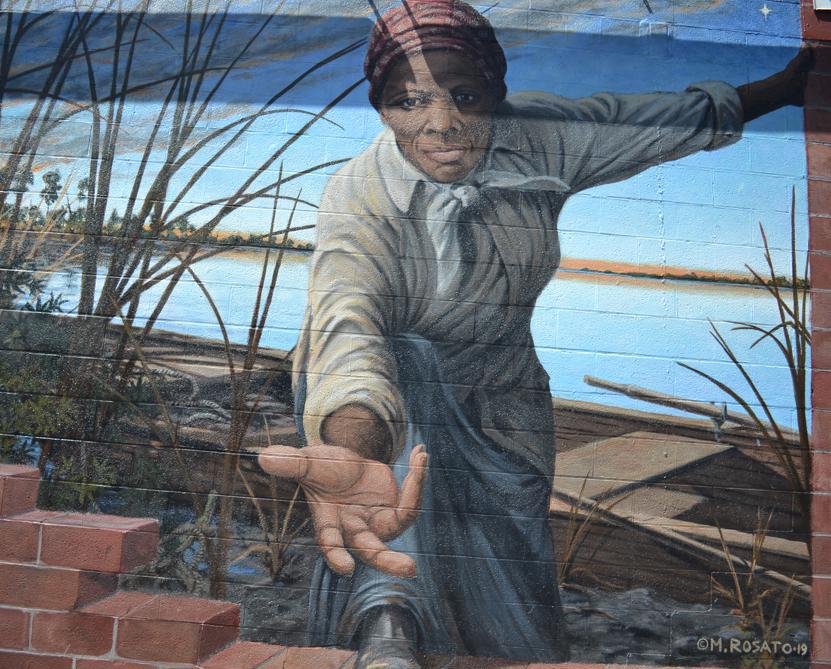


A few years before the Civil War, Harriet Tubman told an interviewer about her enslaved childhood: “I grew up like a neglected weed, ignorant of liberty, having no experience of it.’’
It’s a powerful image, but it becomes even more powerful once you know how much Tubman relied on the natural world — and also how much she suffered in it. In her new book “Wild Girls: How the Outdoors Shaped the Women Who Challenged a Nation,’’ Harvard historian Tiya Miles zooms in on the formative years of Tubman, Pocahontas, and Louisa May Alcott, among many other young women, showing how they explored and reinvented themselves in the outdoors, among both the flowers and the weeds.
“By thinking and acting outside,’’ Miles writes, “these girls who matured into women bent the future of the country toward freedom.’’
It’s a book that urges us to see nature — and also girls — differently. Best of all, it urges us to see and celebrate them together.
My interview with Miles has been condensed and edited.
As an enslaved child, a child separated from her parents at a young age, Tubman was forced to work outside in terribly dangerous and isolating circumstances. She had to do things I can’t imagine doing — pulling muskrats out of their traps, for instance, standing in cold water and surrounded by insects. The outdoors in some ways showed Tubman what slavery was: the loss of personal autonomy, the lack of security.
At the same time, the outdoors also showed Tubman that even within this exploitative system, she could gain a bit of ground. I mean, she could literally gain ground. When she was outside, she wasn’t under the direct gaze of the people enslaving her. She was learning every day what she was capable of. She was learning how nature might assist her.
She was heading toward Pennsylvania, which was a free state, and as she moved north she crossed different ecologies: a really wet environment, a rocky environment, a mountainous environment. It probably took her a week to two weeks. She probably had to live off the land, looking for edible plants. She traveled at night. For directional guidance, she looked to the stars. Tubman didn’t have the privilege of being naive about the dark side of the outdoors. She knew, probably from the moment she was forced to work outside, how dangerous it could be. But over time she learned she could gain more outside than she lost — because it was the outside that provided her route to freedom.
Alcott had a very different life than Tubman, but she still faced constraints. Yes, she was a white, privileged girl, but with those privileges came the expectation that she would behave like a proper New England woman. That meant dressing in ways that to her felt very burdensome — skirts, ribbons, frills. It meant being still, being quiet. It meant taking a back seat to boys and men.
What Alcott really wanted, and she wrote about this at length, was to have the freedom of a wild deer or a wild horse. She was very smart, like Tubman, and ready to push the boundaries of society. Once the Alcotts moved from Boston to Concord, her mother became more permissive. She let Alcott go outside, not just in the garden by their home but also in the fields and meadows. Alcott explored Walden Pond, where she got to hang out with Thoreau. Her mother opened that door, and Alcott kept going, kept observing. It fed her imagination.
That’s exactly right. That’s what I wanted to challenge with this book.
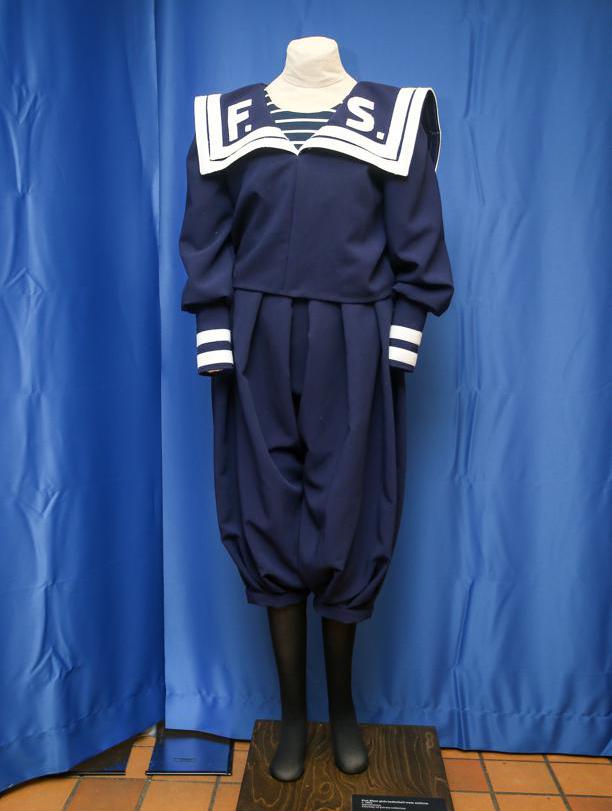
In the late 1800s, the federal government forced or coerced indigenous children to leave their communities and put them into government-funded boarding schools. These schools had campuses with outdoor components, but the girls were living in dorms and studying in classrooms. They were compelled to dress in uncomfortable ways, to have their hair cut. They were separated from their families, their elders, their cultural practices.
These girls had to devise ways to be their individual selves but also their communal selves, their tribal selves. Basketball was a way. It was a sport invented in New England and adapted for girls at Smith College. But when it got to the Native girls at Fort Shaw in Montana, it was a chance for them to be physical again, to run and jump and compete. For white middle class girls, like those Smith students, basketball was something different. For indigenous girls at boarding schools, it was something similar to their childhoods, when they rode horses and played games. The Fort Shaw girls seized on basketball. They practiced until they became expert athletes.
They surprised everyone, beat every team they played in Montana, traveled to St. Louis, and were celebrated at the 1904 World’s Fair. I am not a sports fan, but when I visited the sites of their reservations, and their boarding schools, I was swept up by what they’d accomplished. And they remembered those times later on, in oral histories and family stories. One thing I love is that their daughters and granddaughters all became basketball players, too.
It’s even more than that. We think of the iconic childhood experience as Huck Finn’s. We don’t think, “That’s boyhood.’’ We think, “That’s childhood.’’ As a contrast to that, I wanted to show different girls from different parts of the country, with different degrees of race and class privilege, and to compare how they experienced life outdoors. A through line across their experiences is that, generally speaking, the outside offered them a chance to experiment and to express aspects of their identities they couldn’t inside the house.